Accessible Egypt is possible with a wheelchair or limited mobility, if you plan around these sites
Accessible Egypt is possible with a wheelchair or limited mobility, if you plan around these sites
Egypt wheelchair travel is realistic, but only for part of the country and only with the right setup. The Giza plateau by vehicle, the Grand Egyptian Museum, the main axis of Karnak, the paved court of Luxor Temple, Philae by boat, the ramped sections of Kom Ombo and Edfu and the flat approach to Abu Simbel all work with a wheelchair or a slow walker. The inside of the pyramids, most royal tombs, Hatshepsut in the sun and the sand at Saqqara do not. A Nile cruise works if the ship has an elevator. The real enablers are a private guide, a second pair of hands, a vehicle with room for the chair, a ground floor room with a roll-in shower, and a schedule built around heat and rest.
The honest starting point: what accessible means in Egypt
Egypt was not built for wheels. The monuments are three to five thousand years old, the sidewalks in Cairo are an obstacle course, and the word accessible gets used loosely by hotels and boats that have one ramp and a good heart. What Egypt has instead is a culture where people jump in to help, and an industry that runs on private guides and private vehicles, which is exactly what a traveler with limited mobility needs.
So the honest frame is this. Egypt is not barrier free. Egypt is doable with assistance, and with a plan that accepts a few sites as view-from-outside rather than walk-through. Arrive expecting a country that improvises well and a team that has done this before, and you will see most of what you came for.
Everything below assumes a manual or lightweight folding chair, or a traveler who walks short distances with a cane or a companion. Heavy power chairs change the picture on boats, and we say so where it matters.
Sites that work with a wheelchair or limited mobility
The good news list is longer than most people expect.
Giza plateau by vehicle
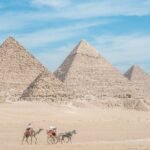
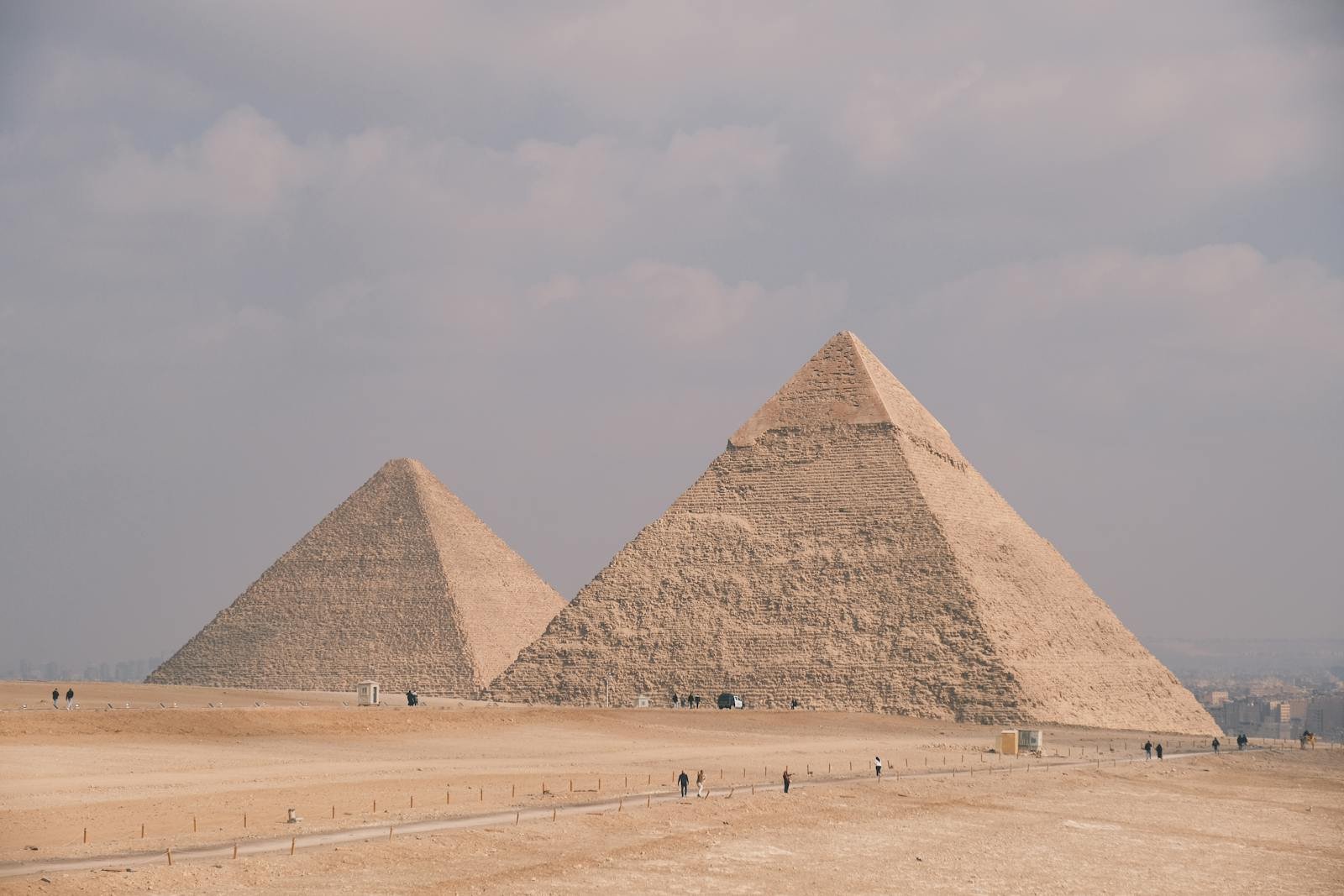
The Pyramids of Giza sit on a plateau with a paved road that loops between the three pyramids, the panorama point in the desert and the Sphinx side. With a private vehicle you can drive between these points and roll out at each one. The panorama has a flat gravel viewing area. The Sphinx enclosure has a ramp down to the viewing terrace with a few uneven patches a companion can manage.
The Grand Egyptian Museum
The Grand Egyptian Museum is the easiest full day in Egypt for a wheelchair. It is new, level, air conditioned, with wide galleries, elevators between floors and accessible restrooms. Tutankhamun and the main galleries need no assistance at all. Plan a half day and rest in the atrium cafes.
Karnak, the main axis
Karnak is huge, but the part that matters most, the main axis from the entrance through the Great Hypostyle Hall to the obelisks, has ramps at most thresholds. The ground is packed earth and flagstone, so a companion pushing is much easier than self-propelling. Side chapels have steps you can skip without missing the point.
Luxor Temple
The great court of Luxor Temple is paved and flat once you are past the entrance ramp. It is small, beautiful at dusk, and one of the least tiring monuments in the country.
Philae
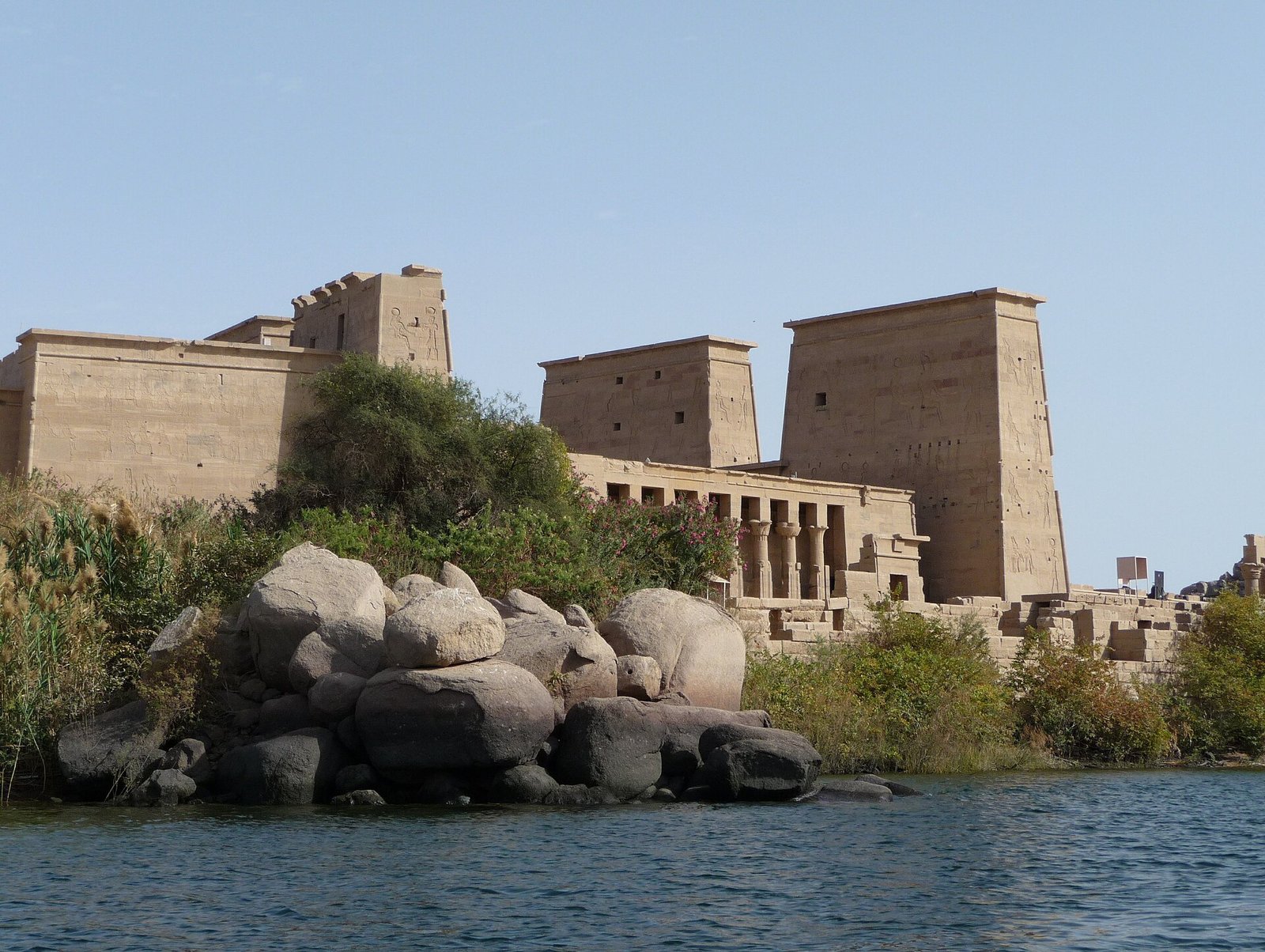
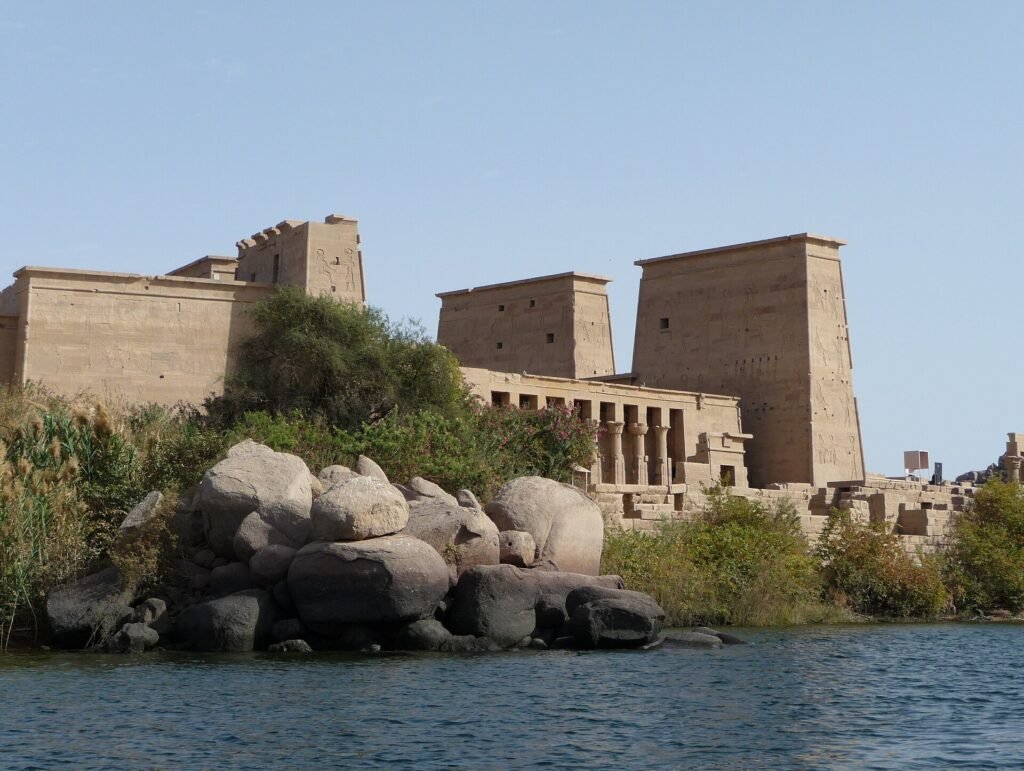
Philae is on an island and you reach it by motorboat. The jetty on both ends is the challenge, with a step down into the boat and a step up onto the island. The boatmen lift chairs and passengers every day and are good at it. Ashore, the main courtyard is flat.
Kom Ombo and Edfu
Both temples now have ramps on the main approach. Kom Ombo has a longer path from the boat landing with a gentle slope. Edfu has a couple of steps at inner thresholds, and the horse carriage from the ship can be replaced by a vehicle if you ask ahead.
Abu Simbel
The walk from the entrance to the temple front of Abu Simbel is a flat, graded path around the artificial hill. It is long and exposed, but it rolls well. The temple doors have a lip and the floors inside are smooth. The small Nefertari temple has a short flight of steps.

Sites that are hard or impossible
Better to know this now than at the ticket booth.
- Inside the pyramids. The passage into the Great Pyramid is a steep, narrow, bent-over climb. Not possible with a chair, not sensible with a cane.
- Most royal tombs. The Valley of the Kings has long sloping corridors with wooden walkways and steps at the entrance. One or two tombs near the parking area are gentler and a strong companion can help a light chair down, but the famous tombs are stairs. The valley itself is reachable by the small electric train.
- Hatshepsut. The temple is three terraces linked by long ramps with no shade. Rollable in theory, brutal in summer for whoever is pushing. Go at opening time or admire it from the flat forecourt.
- Saqqara. The Step Pyramid area is deep sand with a few boardwalks. Chairs sink. A vehicle can bring you to the edge for the view.
Site by site: accessibility and what is needed
| Site | Accessibility | What is needed |
|---|---|---|
| Giza plateau | Good from the vehicle, view and Sphinx terrace | Private vehicle, companion for the Sphinx ramp |
| Grand Egyptian Museum | Excellent, level, elevators, restrooms | Nothing special, a chair can be requested |
| Egyptian Museum Tahrir | Fair, elevator, crowded aisles | Early visit, companion |
| Saqqara | Poor, sand | Vehicle to the edge for the view only |
| Karnak main axis | Good, ramps, uneven flagstone | Companion pushing, skip side chapels |
| Luxor Temple | Good, paved court | Entrance ramp, then flat |
| Valley of the Kings | Poor inside tombs, electric train to the valley | Strong companion for one gentle tomb at most |
| Hatshepsut | Hard, long open ramps | Early start, companion, or forecourt only |
| Edfu | Fair, ramps plus a few steps | Vehicle instead of carriage, companion |
| Kom Ombo | Fair to good, sloped approach | Companion for the slope from the landing |
| Philae | Fair, boat transfer | Boatmen lift at both jetties |
| Abu Simbel | Good, long flat approach | Shade, water, companion for the door lips |
The Nile cruise reality
A Nile cruise is the most restful way to see the south and can be the best part of the trip, or the worst, depending on one question: does the ship have an elevator.
Ships with an elevator vs without
A cruise ship has four or five decks, with cabins on two or three, the restaurant on one and the sun deck on top. Without an elevator, every meal and every sunset means stairs. Larger modern ships have an elevator serving all passenger decks. Smaller and older ones, and every dahabiya sailing boat, do not. Our guide to Nile cruise boat types explains the categories. For a wheelchair, insist on an elevator ship and a cabin on the same deck as the restaurant if one exists.
Cabin doors and bathrooms
Cabin doors on Nile ships are narrower than hotel doors; a compact manual chair passes on most modern ships, a wide or power chair often does not. Bathrooms have a step or a raised threshold, and a shower tray rather than a roll-in floor. A few of the newest ships have one or two adapted cabins with wider doors and a level shower. They book out early.
Gangways that change with the water
The Nile rises and falls, and ships raft up side by side at busy landings. Your gangway might be a gentle ramp one morning and a steep plank across two other ships the next. The crew carries chairs across every day and does it well, but it is a two-person job, so expect it rather than be surprised by it.
Crew help
Nile crews are generous with assistance. Tell the reception manager on the first afternoon what you need at meals, at the gangway and on excursion mornings. If you are choosing between two similar ships, how to choose a Nile cruise covers the other factors.
Transfers, domestic flights and getting around
Public transport is off the table. The whole trip runs on a private vehicle with a driver who knows the routine.
- The vehicle. A folded manual chair fits in a large sedan, but a minivan is better: higher seat, sliding door, room for the chair beside the luggage. Lift-equipped vans exist in Cairo in small numbers and need reserving well ahead.
- Domestic flights. Cairo to Luxor, Cairo to Aswan and Cairo to Hurghada are short domestic hops. Wheelchair assistance is requested when the ticket is booked; the airports have ramps, lifts, aisle chairs and staff to take you to the aircraft. Confirm again at check-in.
- Cairo traffic. Group the Giza sites on one day and the downtown sites on another so nobody sits in a van for an hour twice.
Hotels that actually work
Almost every large hotel in Cairo, Luxor and Aswan lists an accessible room. What that means varies wildly, and the only way to know is for someone to go and look, which we do. Ask for, and have us verify:
- A ground floor room, or a room served by an elevator large enough for the chair with a companion beside it.
- A roll-in shower with a fold-down seat and grab bars, not a tub with a bar bolted to the tile.
- A door width that clears the chair, measured, not assumed.
- A route from the lobby to the restaurant and the pool without steps. Garden hotels in Luxor and Aswan are lovely and full of little staircases.
- A bed height you can transfer to.
In Aswan, the famous hotels sit on hills and terraces. Beautiful, and mostly wrong for a chair; a modern hotel on the corniche is the smarter pick. In Luxor, the East Bank has the flat ground and the elevators. We name properties in the quote, not here, because rooms and renovations change.
The private guide and a second person: the real enablers
Ramps matter less than two people.
The first is a private Egyptologist guide who has worked with wheelchair users before. A group tour cannot wait at a jetty or reroute around a staircase. A private guide picks the route where the ramps are and handles the ticket office, the site staff and the boatmen, so help appears instead of being negotiated.
The second is a companion, a spouse, a friend, an adult child, whose job on the trip is to push, steady, lift a front wheel over a lip and hold a shade umbrella. Our guides and drivers help constantly, but a guide is also explaining Ramses to you and a driver is with the vehicle. A traveler alone can do Egypt with a dedicated helper from us every day, but bring your own second person if you can. It changes what the days feel like.
Group departures, even small ones, are the wrong format here. Every accessible trip we run is built as a custom Egypt tour, because the pace is set by you.
Heat, rest and pacing
Heat turns a workable day into a bad one, and it lands hardest on the person pushing. From May to September, Luxor and Aswan sit above 100 F (38 C) by late morning and can reach 110 F (43 C) in the afternoon. From November to February, mornings are a pleasant 65 to 75 F (18 to 24 C) and the sun is gentle enough for Hatshepsut and Abu Simbel.
The rules we apply on every accessible itinerary:
- Outdoor sites at opening time, indoor sites and the boat in the afternoon.
- One major site before lunch, one minor or indoor site after, never three in a day.
- A rest block of two hours in the middle of every day, in a cool room, not a cafe.
- Water in the vehicle, a hat, a small umbrella and a light towel for shade on the chair.
October through April is the season we recommend. In summer, the Cairo museum days and the cruise still work, and we cut the exposed sites down to sunrise visits.
A 7 day accessible Egypt plan
This is the shape we start from. It uses the standard Cairo, Aswan and Luxor triangle with the hard sites removed and the rest blocks written in.
- Day 1, Cairo. Arrival, meet and assist at the airport, minivan to a verified ground floor room.
- Day 2, Giza. Early Giza plateau by vehicle: the three pyramids from the road, the panorama, the Sphinx terrace. Rest. Afternoon at the Grand Egyptian Museum, all level.
- Day 3, Cairo to Aswan. Morning domestic flight with wheelchair assistance. Afternoon Philae by boat with the boatmen helping at the jetties. Board the elevator ship.
- Day 4, Abu Simbel and sailing. Sunrise drive or flight to Abu Simbel, the long flat approach, back to the ship for lunch. Sail to Kom Ombo, ramped visit at sunset.
- Day 5, Edfu and Luxor. Edfu by vehicle from the landing, then sail on to Luxor. Rest on the sun deck. Luxor Temple in the evening light, paved and calm.
- Day 6, Luxor. Karnak main axis at opening time. Rest. Optional afternoon: the electric train into the Valley of the Kings for one gentle tomb, or a felucca hour on the river instead.
- Day 7, Luxor to Cairo. Domestic flight back and departure, or an extra day for the Egyptian Museum in Tahrir.
What to tell the agency before booking
The quality of an accessible trip is decided in the first message. Send us this:
- Manual or power chair, folding or rigid, and its width and weight. Or: walks short distances with a cane, a walker, or a companion.
- Can you transfer to a vehicle seat and a boat bench with help, or do you need a lift.
- Can you manage two or three steps with a hand, or none at all.
- Roll-in shower required, or a shower with a seat and a step is fine.
- Who is traveling with you and whether they can push on rough ground.
- Heat tolerance and any medication that needs refrigeration on the boat.
- Your travel dates and how firm they are, because adapted cabins drive the calendar.
Read our note on travel insurance for Egypt and make sure your policy covers mobility equipment and a change of itinerary. And bring a small repair kit for the chair and a spare inner tube; no pharmacy in Luxor stocks wheelchair parts.
Frequently asked questions
Can you visit the Pyramids of Giza in a wheelchair?
Yes, from the vehicle road and the viewing points. A private vehicle drives between the three pyramids, the desert panorama and the Sphinx side, and you roll out at each stop. The Sphinx terrace has a ramp with a few uneven patches. What you cannot do is go inside a pyramid; the passages are steep and narrow. The view from outside is the real experience anyway.
Do Nile cruise ships have elevators?
Some do and many do not. Large modern ships usually have an elevator serving every passenger deck. Smaller, older ships and all dahabiya sailing boats rely on stairs. For a wheelchair user, an elevator ship is non-negotiable, and an adapted cabin with a wider door and a level shower is worth booking months ahead because there are only one or two per ship.
Is Abu Simbel accessible with limited mobility?
Mostly yes. The path from the entrance to the temple front is long, flat and graded, and it rolls well with a companion. There is a small lip at the temple door and smooth floors inside. The problem is sun and distance rather than steps, so go at opening, carry water and shade, and skip the short staircase into the smaller Nefertari temple if steps are not possible.
Which Egyptian sites should a wheelchair user skip?
The interior of the pyramids, most tombs in the Valley of the Kings, the Step Pyramid area at Saqqara because of deep sand, and long walks in Khan el Khalili or Coptic Cairo. Hatshepsut is possible only in cool months at opening time because of its long open ramps. Everything else on the classic route can be seen.
Do I need to bring my own helper?
You do not have to, but we recommend it. Our guides and drivers help with lifts, gangways and rough ground every day, and we can add a dedicated assistant for the whole trip. A companion you know makes transfers, bathrooms and rest days easier, and frees the guide to be a guide. If you travel alone, tell us and we build the assistant in from the first morning.
What is the best time of year for an accessible Egypt trip?
October through April. Mornings are mild, 65 to 75 F (18 to 24 C), so the exposed sites like Karnak, Hatshepsut and Abu Simbel are comfortable for you and for whoever is pushing. Summer trips still work for the museums and the cruise, but the outdoor sites shrink to sunrise visits and every day needs a longer rest block in a cool room.
Egypt is waiting, and it has ramps in more places than you were told
Write to us with what you use, what you can manage and when you want to travel. We answer with the ships that have an elevator on your dates, the hotels we have measured, the sites you will see and the ones we steer you away from, and a day by day plan with rest built in. Then we send you the quote.